Wages Rose Sixfold — While the Workforce Shrank by 95%
In 2000, mountain porters earned 2,000–3,000 RMB a month. By 2026, that figure has risen to 9,000–12,000 RMB — a jump that far outpaces national average wage growth. This isn’t broad-based wage inflation. It’s a scarcity premium.
Inelastic Demand
The workforce has shrunk by more than 95% over 25 years, yet the demand for scattered, fragile, small-batch deliveries to summit shops and temples hasn’t gone away — and cable cars simply can’t handle that kind of delivery. Only human hands can.
Rising Marginal Productivity
In 2000, porters were part of a large, easily replaceable workforce. Today, with barely a dozen left, the loss of even a single porter causes real delays in getting supplies up the mountain. Each remaining worker now carries far more economic weight than before.
Skill and Physical Compensation
The technique for balancing heavy loads on uneven stone steps takes years to master. And the work takes a permanent physical toll — irreversible damage to the spine and knees is common after years of carrying. Wages have climbed, in part, to compensate for that cost.

Wang, a mountain porter, heads toward the “Eighteen Bends” of Mount Tai while carrying a load of 70 kilograms.
Institutionalized Bargaining Power
In 2018, porters collectively joined a labor union, which standardized weight-based pricing and delivery rates. This put an end to shopkeepers underpaying or delaying payment, laying institutional groundwork for wages to rise in a structured, sustainable way.
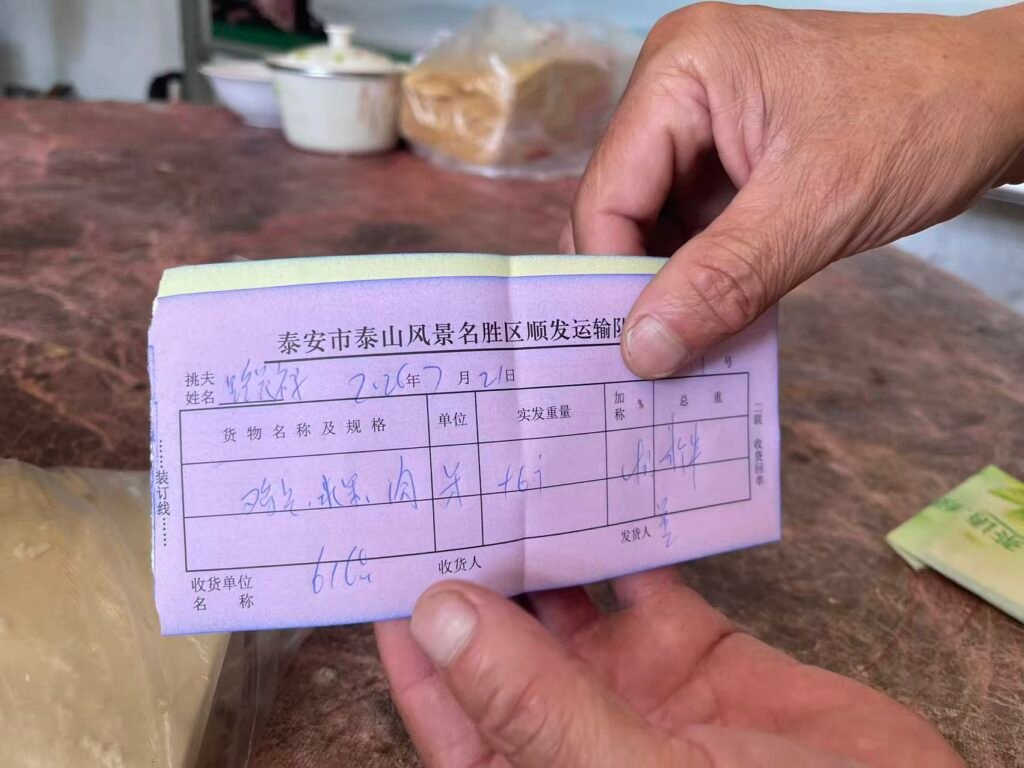
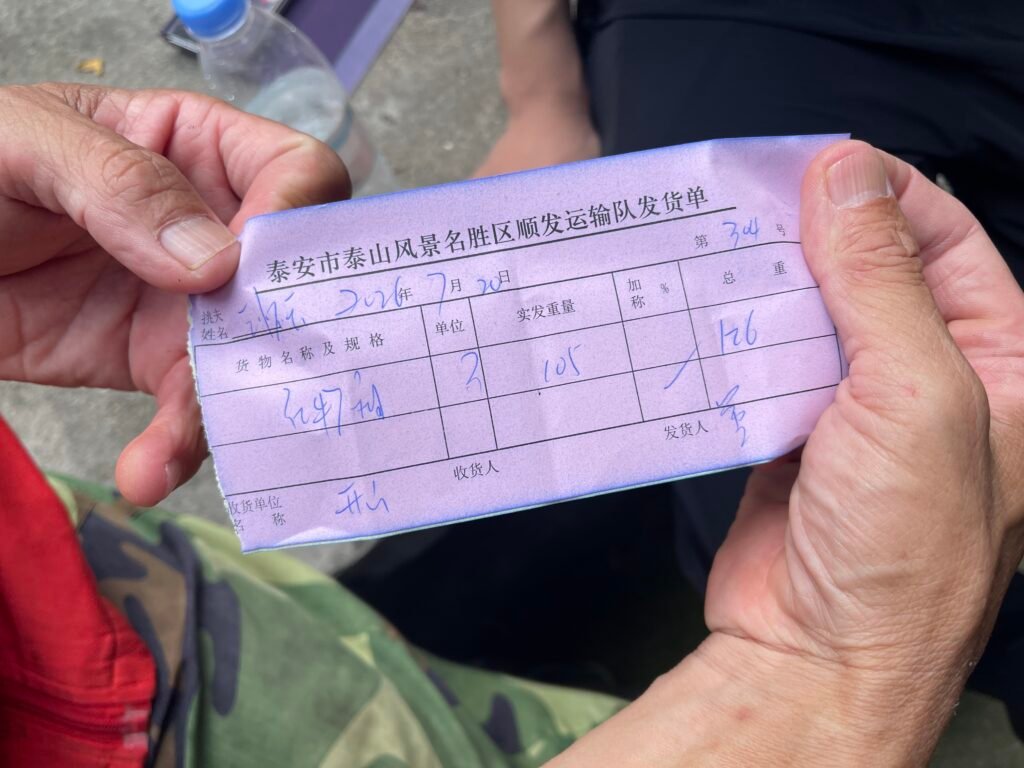
Bills for two porters (the fee is influenced by the distance and weight they carried )
Real Wage Growth After Adjusting for Inflation
| Year 2000 | Adjusted to 2025 Value (CPI) | Actual 2026 Wage | |
| Monthly Wage | 2,000—3,000 RMB | ~RMB 3,280–4,910 | RMB 9,000–12,000 |
Even after adjusting for China’s cumulative CPI inflation of roughly 64% between 2000 and 2025, the 2000 monthly wage of 2,000–3,000 RMB translates to only about 3,300–4,900 RMB in today’s purchasing power. Yet today’s porters earn 9,000–12,000 RMB a month — meaning their real, inflation-adjusted income has grown roughly 2.4 to 2.75 times over. This confirms the wage increase isn’t simply inflation catching up; it reflects a genuine premium driven by the scarcity of the profession itself.
This isn’t a booming industry — it’s a vanishing group of workers who have turned their own irreplaceability into bargaining power.
* Inflation-adjusted figures are estimated based on cumulative CPI data from China’s National Bureau of Statistics. Figures for 2024–2025 are approximate; readers are encouraged to verify against the Bureau’s finalized annual CPI data before citing.